


Indian Cultural Activities for Kids at Home


Indian Cultural Activities for Kids at Home
Indian culture is full of colour, music, stories, food, languages and traditions — which makes it wonderfully easy for young children to explore through play.
Introducing Indian cultural activities for kids at home doesn’t need to feel like a history lesson. A rangoli made with flower petals, a story told by a grandparent, a few words in a regional language or dancing together to an Indian song can all become meaningful ways for children to experience their culture.
For preschoolers especially, the best cultural learning happens when they can see it, hear it, touch it and participate in it. Instead of simply telling children about India, give them opportunities to experience a little piece of it.
Here are some simple ways to bring Indian culture alive at home.
Turn Indian Culture into a Hands-On Adventure
Children learn differently from adults. Long explanations about traditions are unlikely to hold a preschooler’s attention, but give them flowers to make a rangoli or a puppet to tell an Indian folk tale and suddenly culture becomes something they can experience.
Start with a simple theme. You could explore a festival such as Diwali or Holi, choose a region of India, discover Indian animals through stories, or spend an afternoon exploring Indian music.
Then build a few activities around it. For example, a Diwali-themed afternoon could include making a paper diya, listening to festive music, creating a small rangoli and hearing a simple age-appropriate story connected to the festival.
Some easy cultural activities to try include:
Making rangoli patterns with flowers, coloured paper or child-safe colours
Trying simple Warli-inspired drawings
Dressing up in Indian clothes
Making a paper puppet for an Indian story
Looking at India on a map and finding different states
Exploring traditional Indian toys, instruments or household objects
The goal isn't to make children memorise facts. It is to make them curious enough to ask, “What’s that?”, “Why do we do this?” and “Can I try?” That curiosity is where meaningful learning begins.
Explore Indian Culture Through Food, Stories and Festivals
Food is one of the easiest ways to celebrate Indian culture with young children because it engages so many senses at once.
Let children smell familiar spices such as jeera, elaichi or dalchini. Allow them to help roll a small chapati, mix ingredients or observe how a family recipe is prepared. Even something as simple as comparing the smell, colour and texture of different ingredients can become a rich sensory experience.
Stories offer another wonderful doorway into Indian culture. Age-appropriate tales from traditions such as the Panchatantra can introduce children to Indian storytelling while encouraging imagination, language and conversation.
Festivals can bring these experiences together beautifully. Rather than focusing only on decorations, explore one or two simple ideas behind each celebration.
For example:
Diwali: decorate diyas, make a rangoli and talk about light and celebration
Holi: explore colours through art, music and safe sensory play
Raksha Bandhan: make a simple rakhi and talk about sibling relationships
Ganesh Chaturthi: create Ganesh-inspired art and introduce child-friendly songs or stories
Janmashtami: explore music, stories and playful traditions associated with Krishna
Children don't need to understand every historical or religious detail. At this age, a warm and age-appropriate introduction can plant the seeds for deeper understanding later.
Make Music and Movement Part of the Experience
Indian culture is impossible to separate from music and movement — and for preschoolers, that is a huge advantage.
Play different styles of Indian music and simply notice what your child does. Can they clap along? Can they march to the beat? Does one piece make them want to move slowly while another makes them jump or dance?
You can introduce instruments such as the tabla, dholak, manjira, flute or harmonium through pictures, recordings or, where possible, the real instrument. Ask your child what they notice about each sound rather than worrying about teaching technical terminology.
Turn listening into movement too. Try:
Clapping along with a steady beat
Copying a simple two or three-beat rhythm
Moving fast or slowly as the music changes
Dancing with scarves or dupattas
Playing homemade shakers along with a song
Taking turns being the family's "music leader"
You can also introduce children to the idea that India has many different dance and musical traditions. A brief glimpse of Kathak, Bharatanatyam or a regional folk dance can be enough to spark fascination.
For young children, participation matters more than perfect steps. Let them move, imitate, experiment and laugh. Music becomes memorable when children experience it with their whole bodies.
Discover India's Many Languages, Regions and Traditions
One of the most important things children can discover about India is that there isn't just one way to "be Indian."
India is home to many languages, foods, clothes, musical traditions, festivals and regional customs. Even young children can begin to appreciate this diversity when it is presented simply.
Start with language. Teach your child a greeting, number, colour or familiar word in a language spoken by someone in your family or community. If grandparents or relatives speak Marathi, Tamil, Bengali, Gujarati, Punjabi or another Indian language, invite them to teach a favourite rhyme or phrase.
You could create simple picture cards with words in two languages or watch a familiar children's story in another Indian language.
Regional exploration can be equally playful. Pick a state on a map and discover one thing associated with it — perhaps a food, dance, animal, monument, textile or style of art.
The important message is not for children to memorise which tradition belongs where. It is to help them recognise that India is wonderfully diverse.
This also creates opportunities for family conversations. Grandparents can share songs they grew up with, parents can tell childhood stories, and children can discover that culture isn't something that exists only in books. It lives in families, communities and everyday life.
Create Your Own Indian Cultural Day at Home
Once you've explored a few Indian cultural activities for kids, bring them together into your own Cultural Day.
Keep it relaxed. Preschoolers don't need a packed schedule; three or four activities are plenty.
You might begin by dressing in Indian clothes and greeting each other with "Namaste." Next, make a small rangoli or craft together before sitting down for an Indian story.
Afterwards, put on some music and have a family dance session. Finish with a simple Indian snack or meal that your child has helped prepare.
You could also invite grandparents or cousins to participate in person or over a video call. Ask them to contribute something small — a childhood song, a story, a rhyme, a family recipe or even a few words in another language.
Give your child a chance to share something too. They could show everyone their rangoli, sing a song, demonstrate a dance move or retell part of the story they heard.
That little moment of "Look what I learnt!" matters. It transforms cultural learning from something adults teach into something children feel proud to participate in.
Most importantly, don't try to fit all of India into one afternoon. Choose one small experience and enjoy it. There will always be another story, song, festival, language or tradition to discover next time.
The SRGMs Approach
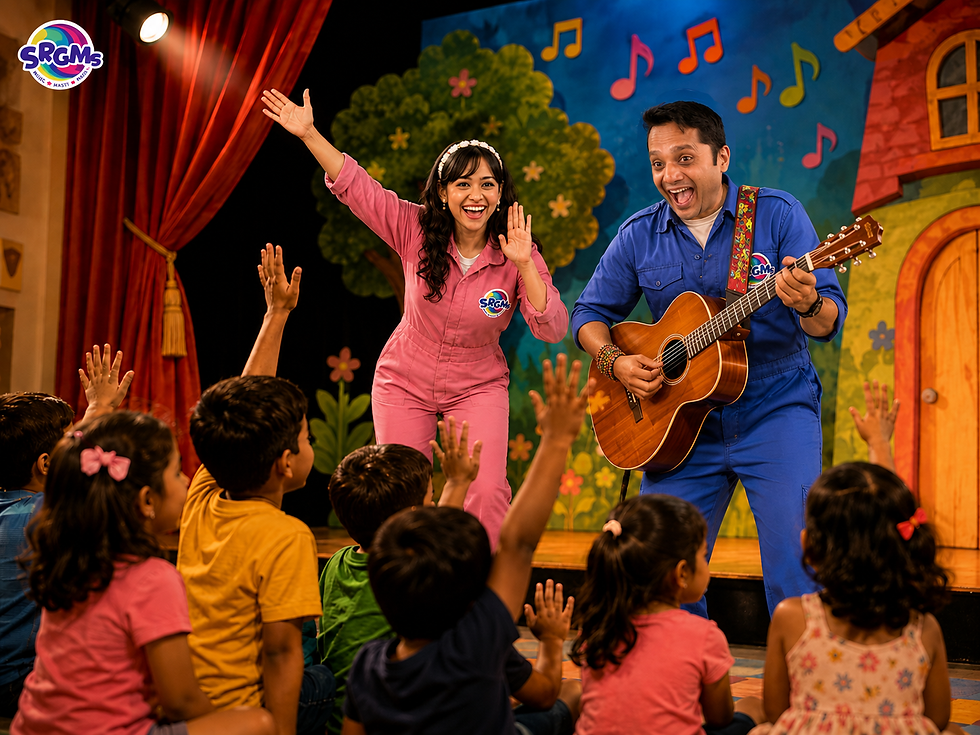
At the SRGMs, we believe children connect most deeply with learning when they can sing it, move with it, imagine it and experience it with joy.
Indian culture offers an extraordinary world of music, stories, movement and play through which children can explore where they come from and the wonderfully diverse country around them.
Make culture something children don't just learn about — but love experiencing.
Frequently Asked Questions
What are some easy Indian cultural activities for kids at home?
Try rangoli making, Indian storytelling, simple crafts, dressing up, cooking together, learning regional words, listening to Indian music and dancing as a family.
How can I teach Indian culture to a preschooler?
Keep it experiential rather than instructional. Use stories, songs, food, art, festivals, clothes and simple conversations so children can see, hear and participate in the culture.
Which Indian festivals are good to explore with young children?
Diwali, Holi, Raksha Bandhan, Ganesh Chaturthi and Janmashtami can all offer child-friendly opportunities for stories, music, crafts and sensory activities.
How can music help children explore Indian culture?
Indian songs, instruments and dance introduce children to rhythm, language and regional traditions while allowing them to learn through listening and movement.
How can families make cultural learning more meaningful?
Involve grandparents and relatives. Family songs, recipes, languages and childhood stories help children understand that culture is something they belong to, not simply something they study.
Final Thought
Stories. Music. Food. Colour. Family.
The best Indian cultural activities for kids turn culture into something children can experience with all their senses. Keep it playful, keep it age-appropriate, and let curiosity lead the way — one song, story and colourful discovery at a time.


Comments