


Navratri Activities for Kids: 9 Ways to Celebrate

Navratri Activities for Kids: 9 Ways to Celebrate
Navratri is here, and across India, homes are filled with colour, music, beautiful decorations and festive excitement. But if you have a toddler or preschooler at home, you might be wondering how to make this celebration special for them.
The good news? You don't need elaborate decorations, expensive outfits or a packed festive calendar.
Some of the most memorable Navratri activities for kids are also the simplest. A little dancing in the living room, making colourful rangoli together, listening to stories or helping decorate the house can turn an ordinary afternoon into a celebration.
Navratri is also a wonderful opportunity to introduce young children to Indian traditions through experiences they can understand and enjoy.
And while the festival celebrates Goddess Durga and the triumph of good over evil, its broader messages of courage, kindness, togetherness and respect can be introduced to children in simple, age-appropriate ways.
Here are nine delightful ways to bring the spirit of Navratri into your child's world.
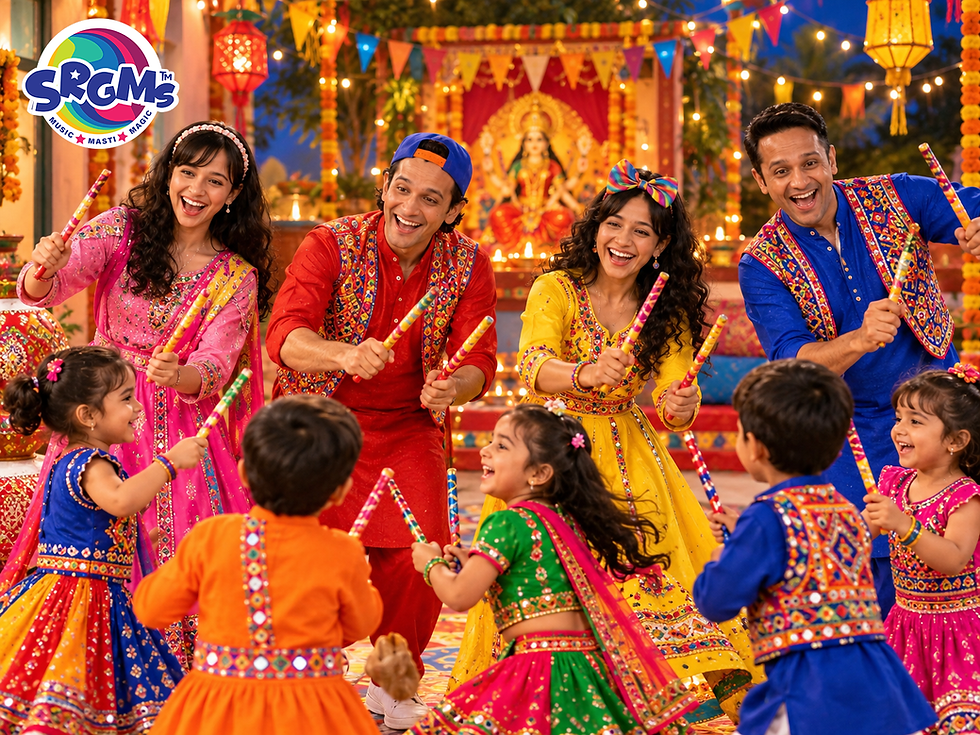
1. Bring Navratri Alive with Music and Garba
If there's one thing toddlers rarely need encouragement to do, it's move when they hear music!
Garba and Dandiya Raas are among the most recognisable celebrations associated with Navratri, particularly in Gujarat. Their lively rhythms, colourful clothing and group participation make them wonderful introductions to Indian cultural traditions.
You don't need to teach your preschooler complicated dance steps. Start with a simple rhythm, demonstrate a few movements and let them follow.
Try these easy Navratri activities for kids:
Clap to the beat: Play a Garba song and encourage your child to clap along.
Follow the leader: Take turns leading simple movements such as clapping, turning and stepping sideways.
Freeze Garba: Dance while the music plays and freeze when it stops.
Family dance circle: Hold hands and move together in a circle.
Dandiya at home: Use soft, child-safe alternatives to traditional wooden sticks for younger children.
These activities offer opportunities to practise listening, coordination, rhythm and following instructions.
More importantly, children experience the joy of celebrating together.
And don't worry if your toddler's Garba looks more like enthusiastic jumping than graceful dancing. That's part of the fun!
2. Explore the Nine Colours of Navratri
One of the most visually exciting aspects of Navratri is its association with nine colours, traditionally linked to the nine days of the festival.
For preschoolers, this creates a wonderful opportunity to combine festive celebrations with colour recognition, vocabulary and creative expression.
Rather than asking children to memorise the colours, turn them into playful discoveries.
You could create a simple colour-themed activity each day:
Colour hunt: Ask your child to find three objects matching the day's colour.
Dress-up fun: Encourage them to choose something to wear in that colour.
Colour collage: Use coloured paper, fabric scraps and stickers to make a festive picture.
Colour sorting: Group toys or household objects according to colour.
Colour songs: Sing a familiar tune using the colour of the day.
You can also introduce comparisons. Ask whether two objects are the same colour or which one is lighter or darker.
The traditional colour sequence changes depending on the year, so check the colours for the current Navratri celebration.
These simple Navratri activities for kids bring together cultural awareness and early learning without making the festival feel like another classroom lesson.
3. Make Your Own Festive Decorations
Children love being included in grown-up activities, especially when they can see their creations proudly displayed around the house.
Instead of decorating everything before your child wakes up, involve them in preparing your home for Navratri.
The decorations don't have to be perfect. In fact, a slightly crooked paper garland made by a three-year-old often carries more meaning than an expensive decoration.
Try these easy Navratri crafts for preschoolers:
Paper flower garlands: Cut out colourful paper flowers and help your child arrange them into a garland.
Handprint decorations: Use washable, child-safe paint to create colourful handprint artwork.
Paper plate rangoli: Decorate paper plates with colourful shapes and patterns.
Festive torans: Create simple doorway decorations using paper leaves and flowers.
Decorated diyas: Let children decorate unlit clay diyas with paint under adult supervision.
Rangoli can also become a lovely sensory activity. Younger children can arrange large flower petals or colourful paper shapes into simple patterns.
Avoid small beads, loose glitter and other choking hazards for toddlers.
These hands-on activities encourage creativity, fine motor development and problem-solving.
But there's another benefit that's easy to overlook: children feel a sense of ownership when they contribute to family celebrations.
That little paper flower on your doorway might become their favourite part of Navratri.
4. Share Stories About Courage, Kindness and Goodness
Festivals offer wonderful opportunities to introduce children to stories that have been shared across generations.
Navratri celebrates Goddess Durga and, in many traditions, her victory over the demon Mahishasura. For young children, however, the story doesn't need to focus on frightening battles or complicated mythology.
Instead, introduce the values behind the celebration through simple storytelling.
You might explain that Goddess Durga represents courage and strength, and that the festival reminds us of the importance of standing up for what is right.
Then connect those ideas to experiences children understand.
For example:
Courage: Trying something new even when it feels difficult.
Kindness: Helping a friend who has fallen.
Strength: Speaking up when something is unfair.
Togetherness: Sharing and including others in games.
Respect: Being gentle with people, animals and nature.
You can use puppets, picture cards or soft toys to bring these ideas alive.
Try creating a story about a little lion who discovers that being brave doesn't always mean being the strongest. Sometimes, it means helping someone smaller.
Invite your child to make animal sounds, act out movements or suggest what happens next. This makes storytelling an interactive experience rather than something children simply listen to.
5. Create Nine Days of Little Festive Adventures
One of the loveliest things about Navratri is that it unfolds over nine days.
For parents, this creates an opportunity to spread the excitement across the festival instead of trying to fit everything into one big celebration.
You could introduce a simple nine-day Navratri activity calendar.
Here is an example:
Day 1 – Music: Sing and dance to a cheerful Garba song.
Day 2 – Colours: Explore the day's festive colour.
Day 3 – Creativity: Make a paper flower or festive decoration.
Day 4 – Stories: Share a simple story about courage or kindness.
Day 5 – Helping: Let your child help prepare the house for guests.
Day 6 – Food: Explore the colours, smells and textures of festive foods.
Day 7 – Family: Learn a simple dance with grandparents or relatives.
Day 8 – Gratitude: Talk about someone who helps or cares for your family.
Day 9 – Celebration: Enjoy a little family Garba party.
These activities don't need to take more than 10–15 minutes each.
You can also introduce a playful Navratri treasure hunt. Hide colourful paper flowers around the room and give children simple clues to find them.
For older preschoolers, include counting, matching or positional words such as under, behind and beside.
The idea is not to create another busy schedule for parents.
It's to give children small, meaningful experiences they can look forward to each day.
The SRGMs Approach
At the SRGMs, we believe festivals become especially meaningful for young children when they can sing, move, imagine and participate. Through music, storytelling and playful experiences, cultural traditions become joyful memories rather than lessons to memorise.
Our story, Dusshera's Ravan Reminder, is a creative and innovative way to help make the festival memorable yet filled with good values for your little one
Explore the story together (Podcast and Youtube):
Podcast Link:
Youtube Link:
The magic of a festival is in how children experience it.
Frequently Asked Questions
How can I make Navratri special for my toddler?
Keep celebrations simple and interactive. Try dancing together, making colourful decorations, sharing stories and involving your toddler in small family traditions.
What are some easy Navratri activities for kids at home?
Colour hunts, paper rangoli, simple Garba movements, festive storytelling and family dance games are enjoyable activities that require very little preparation.
Can toddlers participate in Garba and Dandiya?
Yes! Toddlers can enjoy simple clapping, stepping and dancing to Garba music. Avoid crowded dance floors and hard Dandiya sticks, and keep activities age-appropriate.
How can I explain Navratri to a preschooler?
Explain that Navratri is a special Indian festival celebrating Goddess Durga, courage and goodness. Use simple stories and familiar examples of bravery, kindness and helping others.
How can Navratri celebrations support early childhood learning?
Music, movement, crafts and storytelling create opportunities for children to practise language, coordination, creativity, listening and social interaction while exploring cultural traditions.
Final Thought
Dance. Create. Discover. Share. Celebrate.
Your child may not remember every tradition or understand every story this Navratri. But they will remember the laughter, the music, the colours and the time spent together.
Sometimes, that's where a lifelong love for our traditions begins.


Comments